
Contents
- 1 Introduction to Galaxy Clusters
- 2 What Are Galaxy Clusters?
- 3 Components of Galaxy Clusters
- 4 How Galaxy Clusters Formed
- 5 Types of Galaxy Clusters
- 6 Famous Galaxy-Clusters
- 7 Galaxy Clusters and Dark Matter
- 8 Gravitational Lensing in Galaxy-Clusters
- 9 Role of Galaxy Clusters in Cosmology
- 10 Measuring Cosmic Expansion
- 11 Testing Dark Energy
- 12 Understanding Galaxy Evolution
- 13 Galaxy Cluster’s vs Galaxy Groups
- 14 How Scientists Study Galaxy Clusters
- 15 The Future of Galaxy Clusters
- 16 Conclusion
- 17 FAQs
- 18 ❓ 1. What is a galaxy cluster?
- 19 ❓ 2. How do galaxy cluster’s develop?
- 20 ❓ 3. What makes galaxy cluster’s important in astronomy?
- 21 ❓ 4. What is found inside a galaxy cluster?
- 22 ❓ 5. How large can galaxy cluster’s become?
Introduction to Galaxy Clusters
Galaxy Clusters: The universe is a vast and interconnected system where galaxies rarely exist in isolation. Instead, they are often found grouped together in massive structures known as galaxy-clusters. These clusters are among the largest gravitationally bound objects in the universe and play a crucial role in shaping cosmic structure.
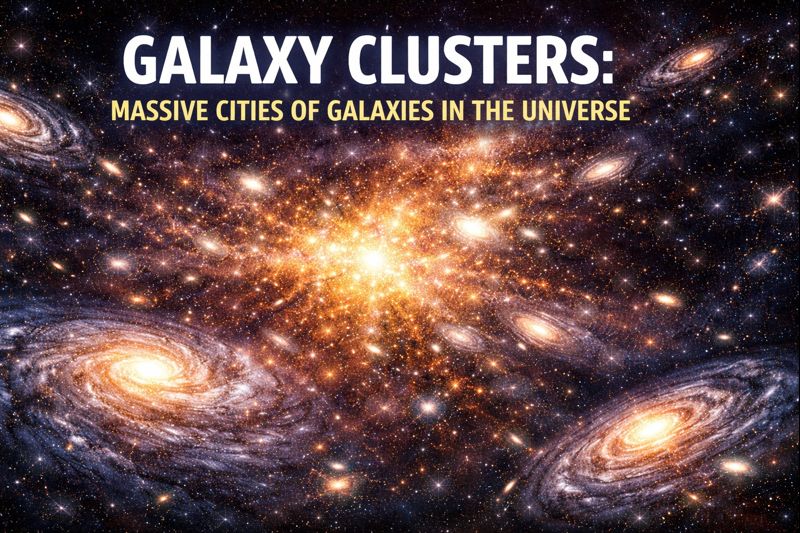
A galaxy-cluster contains hundreds to thousands of galaxies, enormous amounts of hot gas, and a significant quantity of dark matter, all held together by gravity. Studying galaxy clusters helps astronomers understand galaxy formation, dark matter distribution, and the large-scale evolution of the universe.
What Are Galaxy Clusters?
A galaxy cluster is a massive cosmic structure consisting of:
- Hundreds to thousands of galaxies
- Hot, X-ray-emitting gas known as the intracluster medium
- Large amounts of dark matter
Galaxy clusters typically span 2 to 10 million light-years and have masses equivalent to trillions of suns. Their immense gravitational pull binds all components together, making them stable structures over billions of years.
Because of their size and mass, galaxy clusters are considered the building blocks of even larger structures called superclusters.
Components of Galaxy Clusters
1. Galaxies
The visible part of a galaxy cluster is its galaxies, which can include:
- Elliptical galaxies (most common in clusters)
- Spiral galaxies
- Irregular galaxies
Galaxies within clusters interact frequently, leading to mergers and transformations that influence their shapes and star-formation activity.
2. Intracluster Medium (ICM)
Between the galaxies lies extremely hot gas, reaching temperatures of 10–100 million Kelvin. This gas emits X-rays and often contains more mass than all the galaxies combined.
The intracluster medium plays a key role in regulating star formation by stripping gas from galaxies as they move through the cluster.
3. Dark Matter
Dark-matter makes up “the majority of a galaxy cluster’s mass”. Although invisible, its presence is detected through gravitational effects such as galaxy motion and gravitational lensing. Dark matter forms the structural backbone of galaxy clusters.
How Galaxy Clusters Formed
Early Universe Origins
After the Big Bang, the universe was filled with small density fluctuations. Over billions of years, gravity amplified these fluctuations, drawing matter together to form galaxies and galaxy groups.
Hierarchical Growth
Galaxy clusters form through a process called hierarchical clustering, where:
- Small galaxies merge to form larger galaxies
- Galaxy groups merge to form clusters
- Clusters grow by accreting more galaxies and gas
This process is still ongoing, meaning many galaxy clusters are actively evolving today.
Types of Galaxy Clusters
Rich Clusters
Rich clusters contain thousands of galaxies and large amounts of hot gas. They are extremely massive and often dominated by giant elliptical galaxies at their centers.
Poor Clusters
Poor clusters contain fewer galaxies and may resemble large galaxy groups. They are less massive but still gravitationally bound.
Relaxed and Unrelaxed Clusters
- Relaxed clusters are stable and spherical, having formed long ago
- Unrelaxed clusters are irregular and chaotic, often experiencing recent mergers
Famous Galaxy-Clusters
Virgo Cluster
The Virgo Cluster is the nearest large galaxy cluster to the Milky Way and contains over 1,300 identified galaxies. It plays a major role in shaping our local cosmic environment.
Coma Cluster
The Coma Cluster is one of the richest and most studied galaxy clusters. It contains thousands of galaxies and emits strong X-ray radiation due to its hot intracluster gas.
Perseus Cluster
Known for its bright X-ray emissions and central active galaxy, the Perseus Cluster provides valuable insights into interactions between galaxies and hot gas.
Galaxy Clusters and Dark Matter
Galaxy clusters are key evidence for the existence of dark matter. Observations show that:
- Galaxies move too fast to be held together by visible matter alone
- X-ray gas temperatures indicate more mass than seen
- Gravitational lensing reveals massive invisible structures
These findings confirm that dark matter dominates cluster mass and controls their formation and stability.
Gravitational Lensing in Galaxy-Clusters
Galaxy clusters can bend and magnify light from distant galaxies behind them, a phenomenon called gravitational lensing. This effect allows astronomers to:
- Map dark matter distribution
- Observe very distant galaxies
- Measure cluster mass accurately
Strong lensing creates arcs and rings, while weak lensing subtly distorts background galaxy shapes.
Role of Galaxy Clusters in Cosmology
Galaxy clusters are powerful tools for studying the universe.
Measuring Cosmic Expansion
By observing cluster distribution at different distances, scientists can track how structure formation has changed over time, helping to measure cosmic expansion.
Testing Dark Energy
The number and size of galaxy cluster’s depend on the influence of dark energy. Studying them helps refine models of the universe’s accelerating expansion.
Understanding Galaxy Evolution
Dense cluster environments affect galaxy behavior, often reducing star formation and altering galaxy morphology.
Galaxy Cluster’s vs Galaxy Groups
| Feature | Galaxy Group | Galaxy Cluster |
| Number of Galaxies | 10–50 | Hundreds to thousands |
| Size | ~1–2 million light-years | 2–10 million light-years |
| Mass | Lower | Extremely high |
| Hot Gas | Minimal | Large X-ray-emitting gas |
The universe’s most massive gravitationally bound systems are represented by galaxy cluster’s.
How Scientists Study Galaxy Clusters
Optical Observations
Telescopes map galaxy positions and motions to determine cluster structure.
X-ray Astronomy
X-ray telescopes detect hot intracluster gas, revealing cluster mass and temperature.
Computer Simulations
Advanced simulations recreate cluster formation, helping scientists compare theory with observation.
The Future of Galaxy Clusters
Over billions of years:
- Galaxy-clusters will continue to grow through mergers
- Star formation within clusters will decline
- Dark energy will isolate clusters from one another
Eventually, each cluster may become an “island universe” as cosmic expansion accelerates.
Conclusion
Galaxy-clusters are cosmic giants, binding thousands of galaxies, vast oceans of hot gas, and enormous amounts of dark matter into single gravitational systems. They are essential to understanding the structure, history, and future of the universe.
By studying galaxy clusters, astronomers unlock clues about dark matter, dark energy, galaxy evolution, and the ultimate fate of cosmic structures. These massive formations stand as enduring reminders that the universe is shaped not only by stars and galaxies, but by invisible forces acting on the grandest scales imaginable.
FAQs
❓ 1. What is a galaxy cluster?
A galaxy cluster is a huge collection of many galaxies held together by strong gravity.
❓ 2. How do galaxy cluster’s develop?
They grow over time as smaller galaxy groups combine and attract more matter.
❓ 3. What makes galaxy cluster’s important in astronomy?
They help researchers understand dark matter, cosmic evolution, and large-scale structures.
❓ 4. What is found inside a galaxy cluster?
Galaxy clusters contain galaxies, extremely hot gas, and a large amount of unseen dark matter.
❓ 5. How large can galaxy cluster’s become?
Some galaxy clusters stretch across millions of light-years, making them among the largest structures in space.