
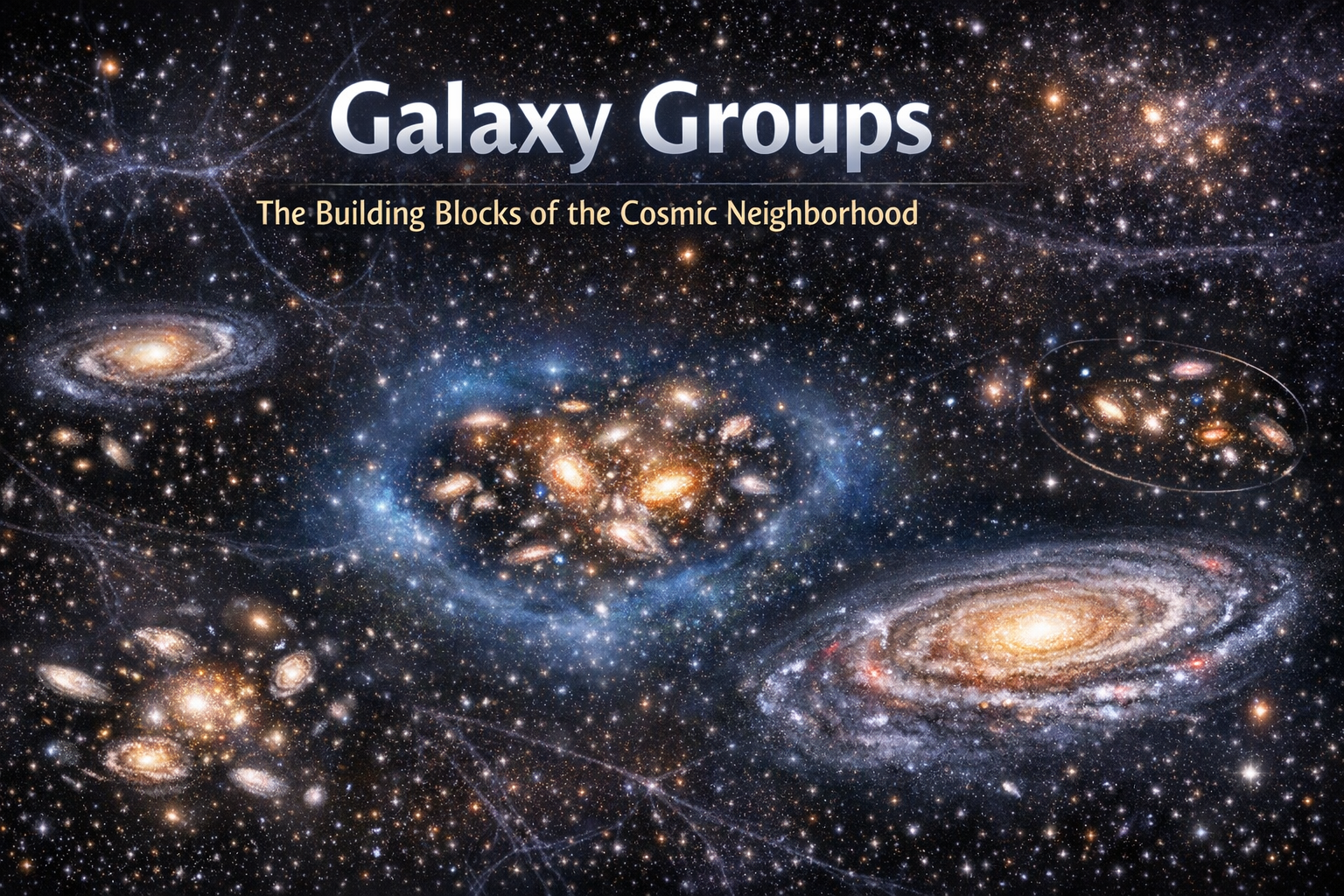
Galaxy Groups: When we look up at the night sky, the stars appear scattered randomly across a vast, silent canvas. But on the largest scales, the universe is far from random. Galaxies—the massive systems of stars, gas, dust, and dark matter—are arranged in an intricate cosmic web.
One of the most important and common structures in this web is the galaxy group. These relatively small collections of galaxies play a critical role in cosmic evolution and act as the fundamental building blocks of larger structures like galaxy clusters and superclusters.
This article explores what galaxy groups are, how they form, their characteristics, types, importance in astronomy, and how they help scientists understand the universe itself.
Read This Article: Galaxy Clusters: Massive Cities of Galaxies in the Universe
Contents
- 1 What Are Galaxy Groups?
- 2 The Scale and Size of Galaxy Groups
- 3 How Galaxy Groups Form
- 4 The Role of Dark Matter
- 5 Types of Galaxy Groups
- 6 The Local Group: Our Cosmic Home
- 7 Galaxy Interactions Within Groups
- 8 Hot Gas and X-ray Emissions
- 9 Why Galaxy Groups Matter in Astronomy
- 10 Galaxy Groups vs. Galaxy Clusters
- 11 Future Research on Galaxy Groups
- 12 Conclusion
- 13 FAQs
- 14 ❓ 1. What are galaxy groups?
- 15 ❓ 2. How many galaxies are in a group?
- 16 ❓ 3. Why are galaxy groups important?
- 17 ❓ 4. What’s an example of the galaxy group?
- 18 ❓ 5. How do galaxy group’s differ from clusters?
What Are Galaxy Groups?
A galaxy-group is a gravitationally bound collection of galaxies, typically containing between two and fifty galaxies. These galaxies are held together by their mutual gravitational attraction, dominated largely by invisible dark matter.
Galaxy groups are smaller and less massive than galaxy clusters but far more common. In fact, most galaxies in the universe—including our own Milky Way—reside in galaxy groups rather than massive clusters.
Unlike isolated galaxies drifting alone in space, galaxies in groups constantly interact with one another. These interactions influence their shapes, star formation rates, and long-term evolution.
The Scale and Size of Galaxy Groups
Galaxy-groups span distances of about 1 to 2 megaparsecs (roughly 3 to 6 million light-years) across. Their total mass typically ranges from 10¹² to 10¹⁴ times the mass of the Sun, with most of this mass coming from dark matter halos surrounding the group.
Although smaller than clusters, galaxy groups are incredibly significant because they represent the most common environment for galaxies in the universe.
How Galaxy Groups Form
Origins in the Early Universe
Galaxy groups formed from small density fluctuations in the early universe, shortly after the Big Bang. Regions with slightly higher matter density began collapsing under gravity, pulling gas and dark matter together.
As time passed:
- Dark matter formed massive halos
- Gas cooled and condensed inside these halos
- Stars and galaxies began to form
Some halos grew large enough to host multiple galaxies, giving rise to galaxy-groups.
Growth Through Accretion
Galaxy groups are not static. They grow by:
- Capturing nearby galaxies
- Merging with other small groups
- Accreting gas from their surroundings
Over billions of years, some galaxy-groups evolve into much larger galaxy clusters.
The Role of Dark Matter
Dark matter is the invisible glue that holds galaxy-groups together. Although it cannot be observed directly, its presence is inferred through:
- Galaxy motions
- Gravitational lensing
- X-ray emissions from hot gas
Without dark matter, galaxy groups would not have enough mass to remain gravitationally bound. In many cases, dark matter makes up over 80% of a galaxy group’s total mass.
Types of Galaxy Groups
Galaxy-groups vary in composition, structure, and evolutionary stage. Astronomers classify them into several broad types.
1. Poor Groups
Poor groups contain only a few galaxies—sometimes just two or three. These systems are loosely bound and often dominated by spiral galaxies.
Interactions in poor groups are relatively gentle, allowing galaxies to retain gas and continue forming new stars.
2. Rich Groups
Rich galaxy groups contain dozens of galaxies and are more tightly bound. They often show evidence of frequent gravitational interactions, such as distorted shapes and tidal tails.
Rich groups can be considered transitional systems between simple groups and full galaxy clusters.
3. Compact Groups
Compact galaxy-groups are tightly packed systems where galaxies are extremely close to one another. This proximity leads to intense interactions, including:
- Galaxy mergers
- Rapid starbursts
- Active galactic nuclei (AGN) activity
Compact groups are rare but scientifically valuable because they provide laboratories for studying extreme galactic evolution.
The Local Group: Our Cosmic Home
One of the most studied galaxy-groups is the Local Group, which includes:
- The Milky Way
- The Andromeda Galaxy
- The Triangulum Galaxy
- Dozens of smaller dwarf galaxies
The Local Group spans about 10 million light-years and is dominated by the Milky Way and Andromeda, which are on a slow collision course expected to culminate in a merger billions of years from now.
Studying the Local Group helps astronomers understand galaxy-group dynamics in great detail because of its proximity.
Galaxy Interactions Within Groups
Galaxy groups are environments where interactions are common but not as violent as in massive clusters.
Gravitational Encounters
Close passes between galaxies can:
- Distort spiral arms
- Trigger bursts of star formation
- Funnel gas toward galactic centers
Galaxy Mergers
Over time, repeated interactions often lead to mergers. These mergers can transform spiral galaxies into elliptical ones and dramatically alter their structure.
Galaxy-groups are considered prime locations for galaxy mergers, more so than clusters, because galaxy velocities are relatively low.
Hot Gas and X-ray Emissions
Many galaxy groups contain a diffuse halo of hot, ionized gas known as the intragroup medium. This gas reaches temperatures of millions of degrees and emits X-rays detectable by space telescopes.
The presence of hot gas provides crucial information about:
- The total mass of the group
- The distribution of dark matter
- The group’s evolutionary stage
Not all galaxy-groups have detectable hot gas, but those that do are usually more massive and evolved.
Why Galaxy Groups Matter in Astronomy
Galaxy groups are essential to our understanding of the universe for several reasons.
1. Most Galaxies Live in Groups
Since the majority of galaxies reside in groups, studying them gives astronomers a realistic picture of typical galactic environments.
2. Clues to Galaxy Evolution
Galaxy groups influence:
- Star formation rates
- Galaxy morphology
- Gas content
By comparing galaxies inside and outside groups, scientists can isolate the effects of environment on galaxy evolution.
3. Stepping Stones to Larger Structures
Galaxy group’s are the building blocks of galaxy clusters and superclusters. Understanding groups helps explain how the largest cosmic structures formed.
Galaxy Groups vs. Galaxy Clusters
While often confused, galaxy groups and clusters differ significantly:
| Feature | Galaxy Groups | Galaxy Clusters |
| Number of galaxies | 2–50 | Hundreds to thousands |
| Size | Smaller | Much larger |
| Galaxy speeds | Slower | Faster |
| Mergers | Common | Less common |
| Frequency | Very common | Relatively rare |
This distinction highlights why galaxy-groups are particularly important for studying galactic interactions.
Future Research on Galaxy Groups
Modern telescopes and surveys are revolutionizing the study of galaxy group’s. Upcoming research focuses on:
- Mapping dark matter distributions
- Studying faint dwarf galaxies
- Understanding gas flows between galaxies
- Tracing group evolution over cosmic time
Advanced simulations and space observatories will continue to reveal how galaxy-groups shape the universe.
Conclusion
Galaxy groups are the universe’s social networks—collections of galaxies bound together by gravity, shaped by interactions, and driven by dark matter. Though smaller than galaxy clusters, they are far more common and play a central role in the cosmic story.
From nurturing galaxy mergers to influencing star formation and serving as the building blocks of larger structures, galaxy group’s are essential to understanding how the universe evolved from a nearly uniform cloud of matter into the rich, structured cosmos we observe today.
As astronomy advances, galaxy group’s will remain at the forefront of research, offering valuable insights into both the past and future of the universe.
FAQs
❓ 1. What are galaxy groups?
Galaxy groups are small collections of galaxies held together by gravity.
❓ 2. How many galaxies are in a group?
A galaxy group typically contains up to 50 galaxies.
❓ 3. Why are galaxy groups important?
They help scientists study galaxy formation and cosmic structure.
❓ 4. What’s an example of the galaxy group?
The Local Group, which includes the Milky Way, is a well-known galaxy group.
❓ 5. How do galaxy group’s differ from clusters?
Galaxy groups are smaller and less dense than galaxy clusters.