
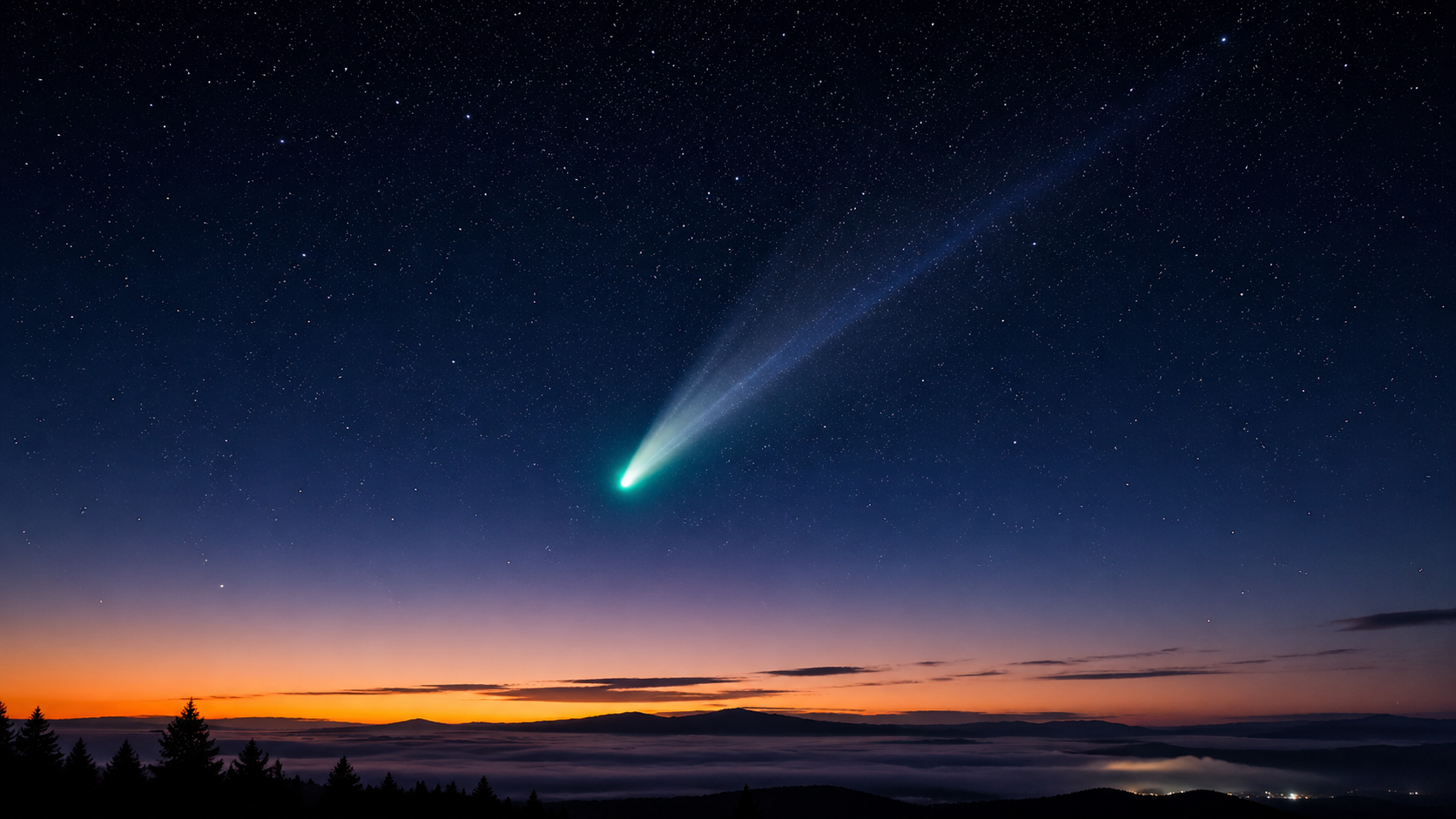
Comet C/2025 R3: On April 27, 2026, skywatchers around the world are treated to a rare and beautiful celestial event as Comet C/2025 R3 makes its closest approach to Earth. Unlike dramatic meteor showers or explosive eclipses, this event offers something more subtle—an intimate, peaceful encounter with the cosmos.
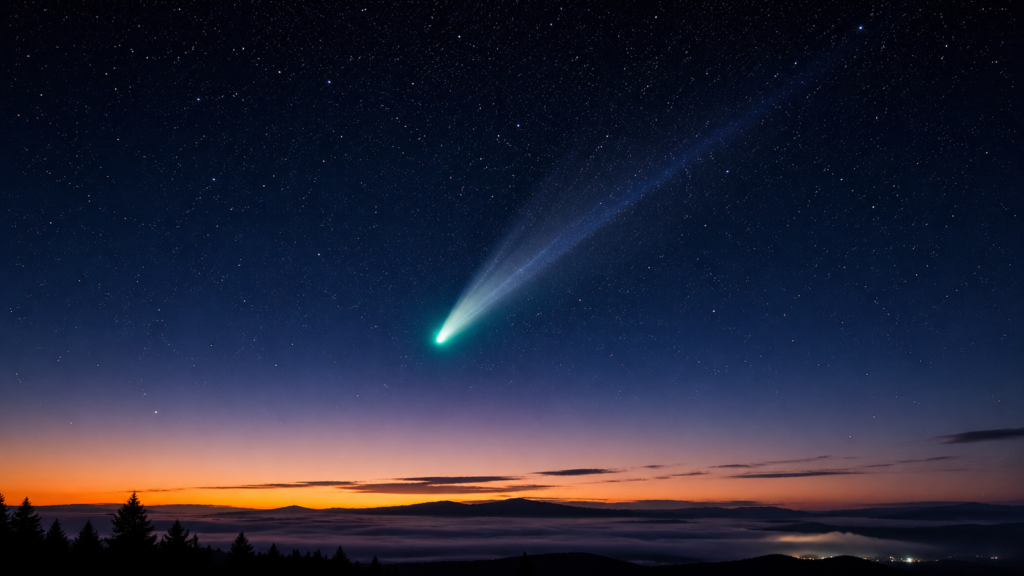
As the comet glides through the predawn sky, its soft green glow and trailing blue tail create a mesmerizing sight. According to NASA, the comet passes at a distance of approximately 44 million miles (about 71 million kilometers) from Earth. While that may sound far, in astronomical terms, it’s close enough to deliver a stunning visual experience.
This is not just another sky event—it’s a reminder of how vast yet accessible our universe can feel when we take a moment to look up.
Contents
- 1 What Is Comet C/2025 R3?
- 2 Why the Comet Appears Green and Blue
- 3 Closest Approach: Why April 27 Matters
- 4 Best Time and How to Watch
- 5 A Gentle Cosmic Experience
- 6 The Cultural and Emotional Connection
- 7 Why Events Like This Matter
- 8 Tips for the Best Viewing Experience
- 9 A Rare Reminder of Our Place in the Universe
- 10 Conclusion
- 11 FAQs
What Is Comet C/2025 R3?
Comet C/2025 R3 is a relatively new visitor to the inner solar system. Like most comets, it is composed of ice, dust, and rocky material—often described as a “dirty snowball.” These ancient objects originate from distant regions such as the Oort Cloud, A massive cloud of icy objects exists far beyond the planets, forming a distant boundary around our solar system.
As the comet approaches the Sun, heat causes its icy surface to vaporize, releasing gas and dust. This process creates two defining features:
- Coma: A bright, hazy envelope that forms around the comet’s core as it heats up near the Sun.
- Tail: Streams of gas and dust that extend millions of kilometers into space
In the case of C/2025 R3, observers have reported a distinct green glow and a long blue ion tail, making it particularly striking compared to many other comets.
Why the Comet Appears Green and Blue
One of the most captivating aspects of Comet C/2025 R3 is its color. This isn’t just a visual trick—it’s rooted in chemistry and physics.
The Green Glow
The green color comes from molecules such as diatomic carbon (C₂). When sunlight interacts with these molecules, they emit a greenish light, giving the comet its eerie, almost neon appearance.
The Blue Tail
The blue tail, on the other hand, is formed by ionized gases like carbon monoxide. Solar radiation strips electrons from these gases, causing them to glow blue as they are pushed away by the solar wind.
This combination of green and blue makes C/2025 R3 one of the most visually unique comets in recent years.
Closest Approach: Why April 27 Matters
Comet C/2025 R3 on April 27, 2026 marks the comet’s closest approach to Earth, also known as perigee. At this point, the comet is at its brightest and most visible.
Here’s why this moment matters:
- Maximum brightness: The comet reflects more sunlight
- Better visibility: Easier to spot with the naked eye or binoculars
- Optimal viewing time: Appears best in the predawn sky
Unlike fleeting meteor streaks, this comet lingers long enough for you to truly appreciate its beauty.
Best Time and How to Watch
When to Look
The best time to observe Comet C/2025 R3 is:
- Early morning (around 4:00 AM to sunrise)
- Just before dawn, when the sky is still dark but the comet is higher in the sky
Where to Look
- Look toward the eastern horizon
- Pick a dark, low-light spot away from city glow to enjoy a clearer and brighter view of the sky.
What You’ll Need
- Naked eye: Possible under dark skies
- Binoculars: Highly recommended for better detail
- Telescope: Optional, for a closer look at the comet’s structure
Even if you’re not an experienced stargazer, this event is beginner-friendly.
A Gentle Cosmic Experience
Some astronomical events demand attention with dramatic intensity—exploding stars, roaring meteor showers, or total solar eclipses. But Comet C/2025 R3 offers something different.
This is a quiet event.
It doesn’t rush. It doesn’t overwhelm. Instead, it invites you to pause, breathe, and reconnect with the night sky.
Moments like this remind us that astronomy isn’t just about science—it’s also about emotion, wonder, and perspective.
The Cultural and Emotional Connection
Watching this Comet C/2025 R3 feels personal—it creates a quiet connection between us and the vast universe above.
For centuries, comets have been seen as:
- Omens and signs in ancient cultures
- Symbols of change and transformation
- Rare visitors that connect generations
Today, while we understand the science behind them, the emotional impact remains the same. Standing under the sky, watching Comet C/2025 R3 glowing object that has traveled millions—or even billions—of years to reach us creates a powerful sense of connection.
It’s easy to imagine a scene straight out of a comic strip—like Snoopy and Woodstock sitting quietly on a rooftop, gazing at the sky. That peaceful imagery perfectly captures the mood of this event.
Why Events Like This Matter
In a world filled with constant notifications and distractions, events like this offer something rare: stillness.
Looking at a comet can:
- Reduce stress and promote mindfulness
- Spark curiosity about space and science
- Create meaningful memories with friends or family
It’s a reminder that not everything extraordinary has to be loud.
Sometimes, the most powerful experiences are the quiet ones.
Tips for the Best Viewing Experience
To make the most of April 27, keep these tips in mind:
1. Find a Dark Location
Avoid city lights. Rural or open areas provide the best visibility.
2. Check the Weather
Clear skies are essential. Even light clouds can obscure the comet.
3. Arrive Early
Allow your eyes 20–30 minutes to fully adapt to the dark, helping you spot faint details in the night sky more easily.
4. Use a Star Map App
Apps can help you locate the comet more easily in the sky.
5. Bring Warm Clothing
Early mornings can be chilly, even in warmer regions.
A Rare Reminder of Our Place in the Universe
Comet C/2025 R3 isn’t just another space object—it’s a distant traveler from the edge of our solar system, passing by Earth for a short time before heading back into deep space.
Events like this remind us:
- Earth is part of a much larger cosmic system
- Time in space operates on scales far beyond human life
- Beauty exists in the simplest natural phenomena
For a few mornings in April 2026, the universe feels just a little closer.
Conclusion
On April 27, 2026, Comet C/2025 R3 offers a rare opportunity to witness something both scientifically fascinating and emotionally profound. Its green glow and blue tail paint the sky with subtle brilliance, creating a moment that feels almost personal.
You don’t need expensive equipment or expert knowledge—just a willingness to wake up early, step outside, and look up.
Because sometimes, a single Comet C/2025 R3 is enough to remind us how extraordinary the universe truly is.
FAQs
1. Can I see Comet C/2025 R3 without a telescope?
Yes, under dark skies it may be visible to the naked eye, but binoculars will significantly improve the view.
2. Why does the comet appear green?
The green color comes from glowing carbon molecules (C₂) reacting to sunlight.
3. When is the ideal time to see the comet clearly in the sky?
Early morning before sunrise, around 4:00 AM, offers the best visibility.
4. How close does the comet come to Earth?
It passes at about 44 million miles (71 million km) from Earth.
5. Will the comet return again soon?
Most comets like C/2025 R3 have very long orbits, so it may not return for thousands—or even millions—of years.