
Contents
- 1 ✨ A Once-in-a-While Celestial Event You Shouldn’t Miss
- 2 🌠 What Is a Planetary Alignment?
- 3 🔭 Meet the Four Planets
- 4 🌅 When and Where to Watch
- 5 👀 Viewing Tips
- 6 🌌 Why This Event Is Worth Watching
- 7 📸 How to Capture the Alignment
- 8 🌠 Final Thoughts
- 9 ❓ FAQs About the April 18 Planetary Alignment
- 10 1. Can I see all four planets without a telescope?
- 11 2. What time should I wake up to see the alignment?
- 12 3. Is this event visible from India?
- 13 4. Why is Neptune hard to see?
- 14 5. How often do such planetary alignments happen?
✨ A Once-in-a-While Celestial Event You Shouldn’t Miss
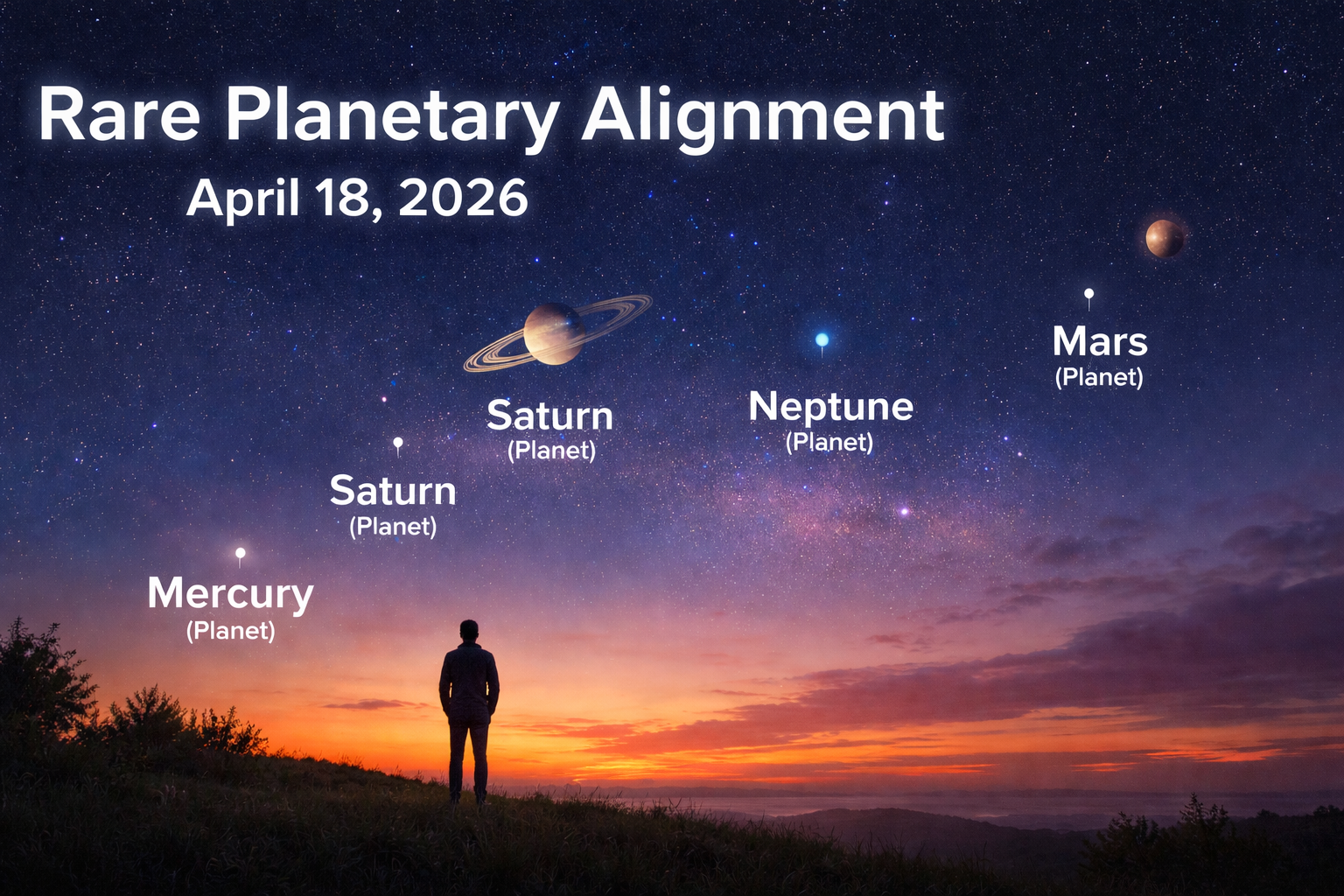
A rare sky event is on the way, and it’s worth waking up early for. Before sunrise on April 18, 2026, four planets — Mercury, Saturn, Neptune, and Mars — will appear together in the eastern sky.
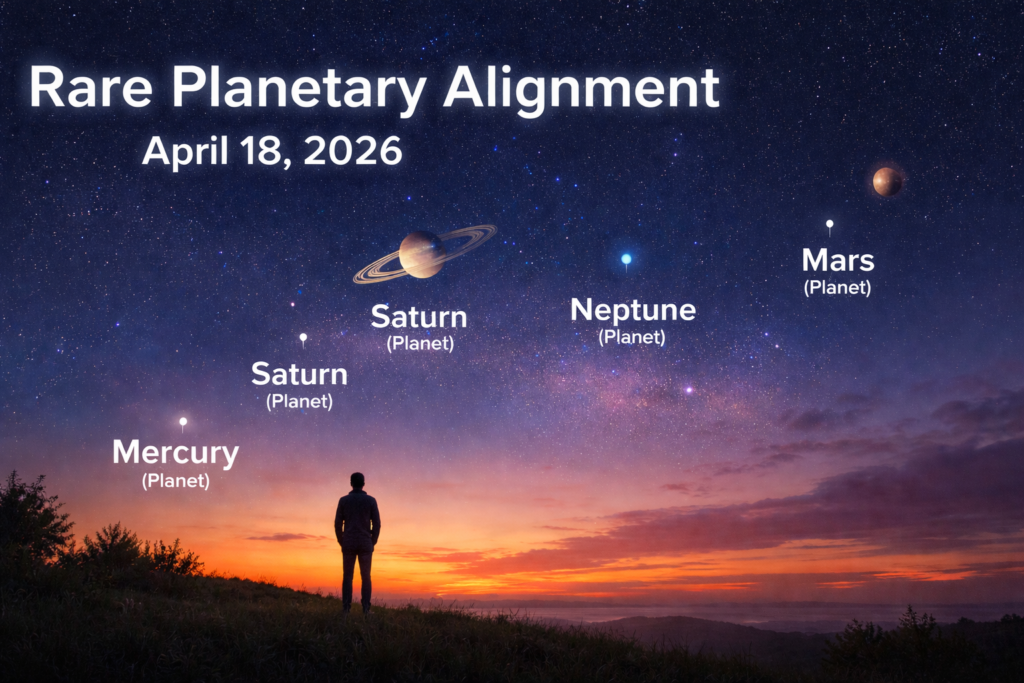
This rare planetary alignment will create one of those quiet, magical moments that make the universe feel both vast and deeply personal. While some of these planets will shine brightly, others may require darker skies and a bit of patience to spot. But together, they will transform the early morning sky into something unforgettable.
If you enjoy stargazing, astronomy, or simply appreciating nature’s beauty, this is an event you won’t want to miss.
🌠 What Is a Planetary Alignment?
A planetary alignment occurs when multiple planets appear close together in the sky as seen from Earth. While they are not actually lined up in space, their orbits bring them into a similar line of sight, creating a stunning visual grouping.
This April 18 alignment is particularly special because it includes both bright and faint planets, offering a layered viewing experience. You’ll be able to see some with the naked eye, while others will challenge your observation skills.
These events are not extremely rare, but seeing four planets together in one part of the sky is uncommon enough to make it exciting for skywatchers around the world.
🔭 Meet the Four Planets
☿ Mercury – The Swift and Elusive Planet
Mercury is the closest planet to the Sun and one of the most difficult to observe. It appears only briefly during twilight, either just before sunrise or after sunset.
On April 18, Mercury will be low on the eastern horizon. You’ll need a clear view and good timing to catch it before the Sun rises.
🪐 Saturn – The Elegant Ringed Giant
Saturn is known for its iconic rings and soft golden glow. It is relatively easy to spot in the sky and will serve as a helpful reference point when locating other planets.
Also Read: Stars: The Shining Engines of the Universe
Although you won’t see its rings with the naked eye, even a small telescope can reveal its breathtaking structure.
🔵 Neptune – The Faint Distant World
Neptune is the most distant planet in this lineup and also the faintest. It will not be visible to the naked eye, so binoculars or a telescope are required.
Spotting Neptune adds an extra layer of excitement, especially for experienced observers who enjoy a challenge.
🔴 Mars – The Bright Red Neighbor
Mars is one of the easiest planets to identify due to its distinct reddish color. It will shine clearly in the morning sky and provide a vivid contrast against the softer tones of dawn.
🌅 When and Where to Watch
To fully enjoy this celestial event, timing and location are key:
- Date: April 18, 2026
- Best Time: 45–60 minutes before sunrise
- Direction: Eastern horizon
- Ideal Location: Open areas with minimal light pollution
👀 Viewing Tips
- Set your alarm early and give your eyes time to adjust to the dark
- Use a stargazing app to locate the planets quickly
- Bring binoculars or a telescope for a better experience
- Avoid city lights for clearer visibility
- Check weather conditions in advance
🌌 Why This Event Is Worth Watching
This planetary alignment is more than just an astronomical event — it’s a peaceful and reflective experience. In the stillness of early morning, as the world slowly wakes up, you’ll witness a cosmic arrangement that has taken millions of kilometers of motion to create.
Moments like this remind us:
- How vast and interconnected the universe is
- How small yet meaningful our place in it can feel
- The beauty of slowing down and observing nature
Whether you’re watching alone or sharing the moment with loved ones, this event offers a rare chance to connect with the cosmos.
📸 How to Capture the Alignment
If you’re interested in photography, this event is a great opportunity:
- Use a tripod for stability
- Choose a wide-angle lens to capture more of the sky
- Try long exposure settings for faint objects
- Use manual focus for sharp results
Smartphones with night mode can capture brighter planets like Mars and Saturn, though Neptune may remain invisible in photos without advanced equipment.
🌠 Final Thoughts
The morning of April 18, 2026, promises a breathtaking celestial display that combines science, beauty, and emotion. Seeing Mercury, Saturn, Neptune, and Mars together in the sky is not something that happens every day.
So set your alarm, step outside, and look east. Let the quiet beauty of this planetary gathering remind you that even in the vastness of space, there are moments of perfect alignment.
Four worlds. One sky. One breathtaking start to the day. ✨🌌
❓ FAQs About the April 18 Planetary Alignment
1. Can I see all four planets without a telescope?
You can see Mars and Saturn easily, Mercury with some effort, but Neptune requires a telescope or strong binoculars.
2. What time should I wake up to see the alignment?
Aim to be outside about 45–60 minutes before your local sunrise for the best view.
3. Is this event visible from India?
Yes, this alignment will be visible from India, including cities like Delhi, Mumbai, and Ghaziabad, provided the sky is clear.
4. Why is Neptune hard to see?
Neptune is very far from Earth and reflects less sunlight, making it appear faint even under dark skies.
5. How often do such planetary alignments happen?
They occur occasionally, but alignments involving four visible planets are relatively rare and worth watching.